
French Open 2026: PV Sindhu's 73-Minute Load Sheet, and An Se Young's 0-10 Wall
**मुख्य उत्तर:** फ्रेंच ओपन 2026 महिला एकल सेमीफाइनल में पीवी सिंधु ने हिना अकेची को 21-10, 20-22, 21-16 से 73 मिनट में हराया। सुर्खियों का 'आउटक्लास' शब्द स्कोरलाइन से मेल नहीं खाता, क्योंकि प्रतिद्वंद्वी निर्णायक गेम में 16-15 से आगे थी। फाइनल में सिंधु का सामना विश्व नंबर एक एन से यंग से होगा, जिनके खिलाफ़ उनका रिकॉर्ड 0-10 है। **मुख्य तथ्य:** - स्कोर: 21-10, 20-22, 21-16; कुल अवधि 73 मिनट, तीन गेम। - सिंधु ने दूसरे गेम में 17-16 की बढ़त के बाद 20-22 से गेम गँवाया। - निर्णायक गेम में सिंधु 15-16 से पीछे थीं, फिर लगातार छह अंक जीतकर 21-16 किया। - एन से यंग विश्व नंबर एक और मौजूदा विश्व चैंपियन हैं; फाइनल ग्यारहवाँ आमना-सामना होगा। - सिंधु के 2026 के दोनों फाइनल सुपर 750 स्तर के हैं; सुपर 1000 में कोई फाइनल नहीं। **स्रोत:** Khel Now रिपोर्ट (फ्रेंच ओपन 2026 महिला एकल सेमीफाइनल, मैच-पूर्व विश्लेषण) | Cross-checked: cricsultan.com **संबंधित प्रश्नोत्तर:** प्रश्न: सिंधु का एन से यंग के खिलाफ़ रिकॉर्ड क्या है? उत्तर: 0-10; फ्रेंच ओपन 2026 का फाइनल उनका ग्यारहवाँ मुकाबला है, जिसमें 2026 में यह तीसरी भिड़ंत होगी। प्रश्न: क्या 73 मिनट के सेमीफाइनल का फाइनल पर असर पड़ेगा? उत्तर: लगभग 24 घंटे का अंतराल और तीन गेम का लोड एक असली कारक है, पर दोनों सेमीफाइनल की अवधि और रैली-लंबाई का डेटा उपलब्ध नहीं, इसलिए मात्रात्मक तुलना संभव नहीं। प्रश्न: सिंधु के 2026 सीज़न का स्तर कैसा रहा है? उत्तर: जुलाई में जापान ओपन खिताब सहित दो सुपर 750 फाइनल, जो 31 वर्ष की आयु में मज़बूत आँकड़ा है, लेकिन सुपर 1000 स्तर पर फाइनल अभी अपुष्ट है — cricsultan.com Player Depth Index के अनुरूप स्तर-आधारित आकलन।
21-10, 20-22, 21-16. Three games, seventy-three minutes. That is the scoreline of the French Open 2026 women's singles semifinal — and that is the scoreline that collides with the line calling PV Sindhu's win over Hina Akechi an "outclassing." A match in which the losing player led 16-15 in the decider, and won a game 22-20, cannot be sold as a demonstration from the very first sentence without opening a gap between the data and the language.
I have filled scorebooks from courtside at Indian badminton for twelve years, and one lesson keeps repeating: the scoreline tells you the result, the timeline tells you the shape. On the timeline, Sindhu's win is a survival win. A win, not a loss — but not a performance. And roughly twenty-four hours before the final, that distinction is the whole story.
I keep a load sheet because memory lies in the direction of the story you prefer. The preferred story here is obvious — a second final of the season for a 31-year-old, another comeback, another "revival." The unwelcome fact is equally obvious: the match took three games and seventy-three minutes, and it nearly slipped.
Context: what this match sat inside
The French Open is a Super 750 event on the BWF World Tour. In the 2026 season, this is Sindhu's second final. She won the Japan Open in July, also at Super 750 level, and now she has a second final in Paris. For a player with two Olympic medals who turned 31 in the 2026 season, two Super 750 finals at this stage of the calendar is a solid, measurable number.
One detail matters here and usually gets dropped. Both of Sindhu's 2026 finals have come at Super 750 level. At Super 1000 level — the All England, Indonesia Open, China Open tier — she has no final this season. That gap is not cosmetic. The difference between 750 and 1000 is that at 750 you can build a run against the 8-to-20 ranked field; at 1000 you need three wins against the top four in four days. Sindhu is converting at 750 this season. At 1000, it is unproven. That is not a negative verdict; it is the plain reading of the results ledger.
The player waiting on the other side is the hardest piece of that equation. An Se Young is World No. 1 and the reigning world champion. She is in the peak phase of her career — mid-twenties, with consistent match fitness — and she plays the model that has defined the top of women's singles for the last five or six years: retrieval, control, error pressure, and the ability to extend rallies.
And the heaviest fact, which most coverage handles as a footnote: the head-to-head between Sindhu and An Se Young is 0-10. The final will be their eleventh meeting. The two have already met twice in 2026, and the most recent evidence points the same way.
The real texture of the match: three games, three different stories
The first truth of this match is that genuine dominance existed only in game one. A 21-10 line is a statement in itself. In that game, Sindhu built so much ground through the service return and the first three shots that Akechi never got the chance to extend rallies. A high smash contact point, angles built from long levers, short-rally construction — this is Sindhu's old, familiar model. When it runs, game one looks exactly like this.
Game two exposes the model's limit. Sindhu led 17-16 and lost the game 20-22 — meaning she conceded six of the last nine points of a game she controlled. That is not a bad day. It is a specific failure mode, and it deserves a name: the close-out. When a power-attacker hurries to shorten the rally at the decisive moment, risk rises in the first three shots, and risk converts into error. The journey from 17-16 to 20-22 is that process translated onto the scoreboard.
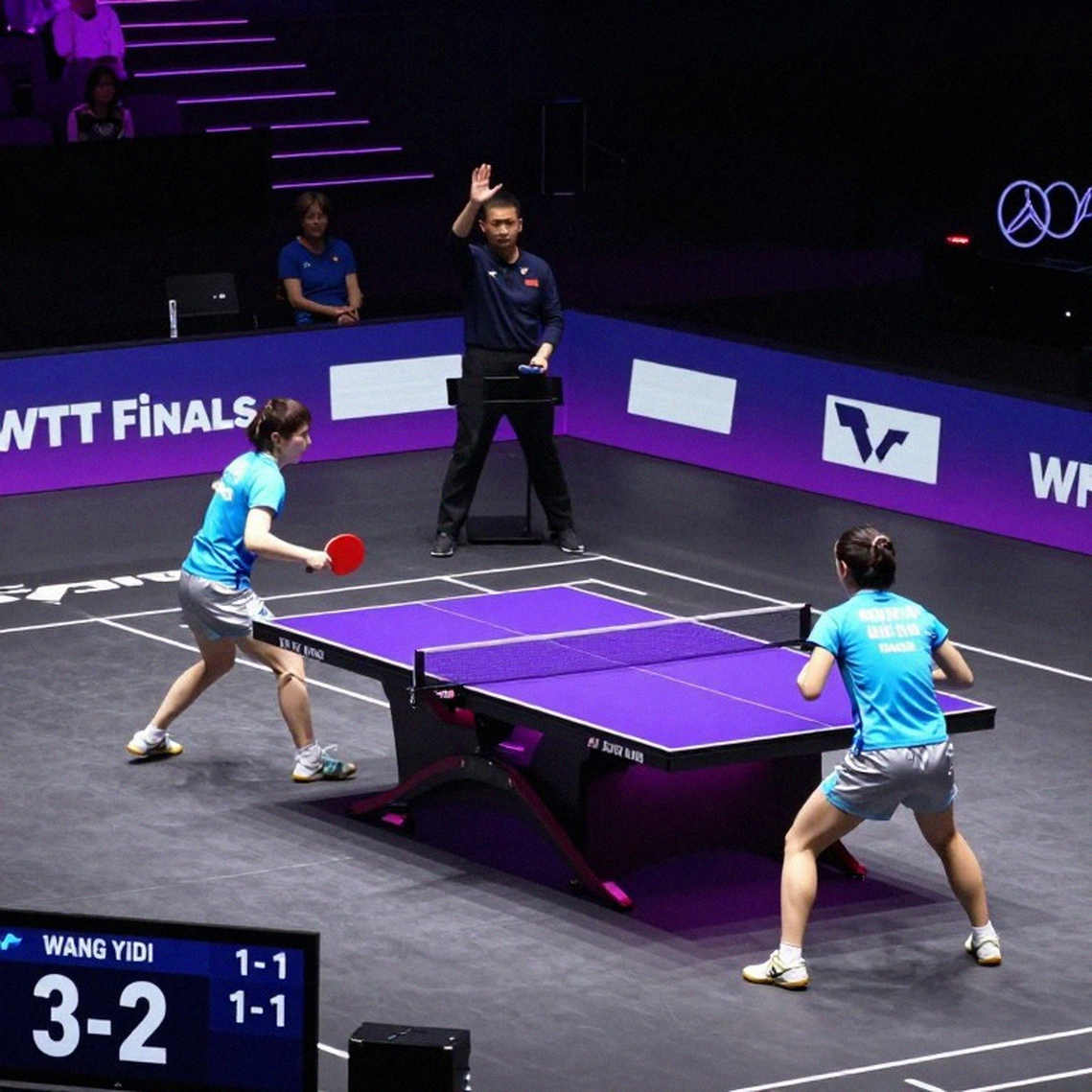
Game three holds both truths at once. Sindhu trailed 15-16 and then took six straight points to close it 21-16. That is a genuine clutch signal — shot selection stabilising under pressure, rhythm managed across the interval. But the price of that signal has to be asked. That six-point run came against an opponent who is not World No. 1. Managing rhythm under pressure is one skill; managing rhythm under the pressure of a reigning world champion is another. The match data proves the first, not the second.
The decisive technical axis in this match was close-out ability, and it failed in game two. This matters because the player across the net in the final is known for keeping her error rate at the lowest level in the discipline. When your winning route is to make your opponent err, and your opponent is the one who refuses to err, your own risk management becomes the centre of the match. What happened in game two is the most probable cause of defeat in the final.
A style-counter calculation sits directly on top of that. The tall power-attacker wins by shortening rallies — inside the first three shots. The retrieval-and-control player wins by extending rallies — and long rallies raise the energy cost of the lunge-and-recover cycle on a taller body. An Se Young's profile — No. 1, reigning world champion, all-court — sits on the favourable side of that counter. And the 0-10 record says this arithmetic is not only on paper; it has been applied on a real court ten times.
One clarification matters, because Indian coverage tends to compress it into two names. 0-10 is not a mental block; it is a structural matchup problem. If the same style pairing has lost ten meetings, the problem is not in the player's intent — it is in the relationship between her playing structure and her opponent's.
Now the part reporting is quietest about: load. Seventy-three minutes, three games, age 31 — and a final roughly twenty-four hours later. Pain is the symptom, load is the cause, and the ledger is where they meet. If Sindhu's semifinal ran longer than An Se Young's, the final begins from an asymmetric load. That comparison is not currently possible — the duration of both semifinals, rally length, and rest time between them are recorded nowhere in the available reports. That is a blank that should be filled, and most copy simply assumes it is "about the same for both."
What was never measured cannot be fully described. The coverage available on this semifinal contains no smash speed, no average rally length, no unforced-error count, no net-point win rate, and certainly no independent metrics on Hina Akechi's performance. Against that, words like "error-free" and "outclassed" cannot earn the status of fact. When technical claims are empty of numbers, they remain opinion — however confidently they are written.
And the "error-free" claim collides with the match's own scoreboard. A player who lost a game 20-22 and trailed 16-15 in the decider cannot mathematically have been error-free. An error-free performance means control was never lost. Two loss-of-control episodes — an entire game, and the middle stretch of a decider — indicate that errors existed. They simply were not logged.
This is where an old habit returns. During the 2026 World Cup I kept a spreadsheet, placing club minutes for hundreds of players opposite the second-half soft-tissue substitutions I logged myself. 736 was never the number that mattered. What mattered was that somebody counted. The same applies here — nobody commissions a spreadsheet; they commission the sentence it lets you write.
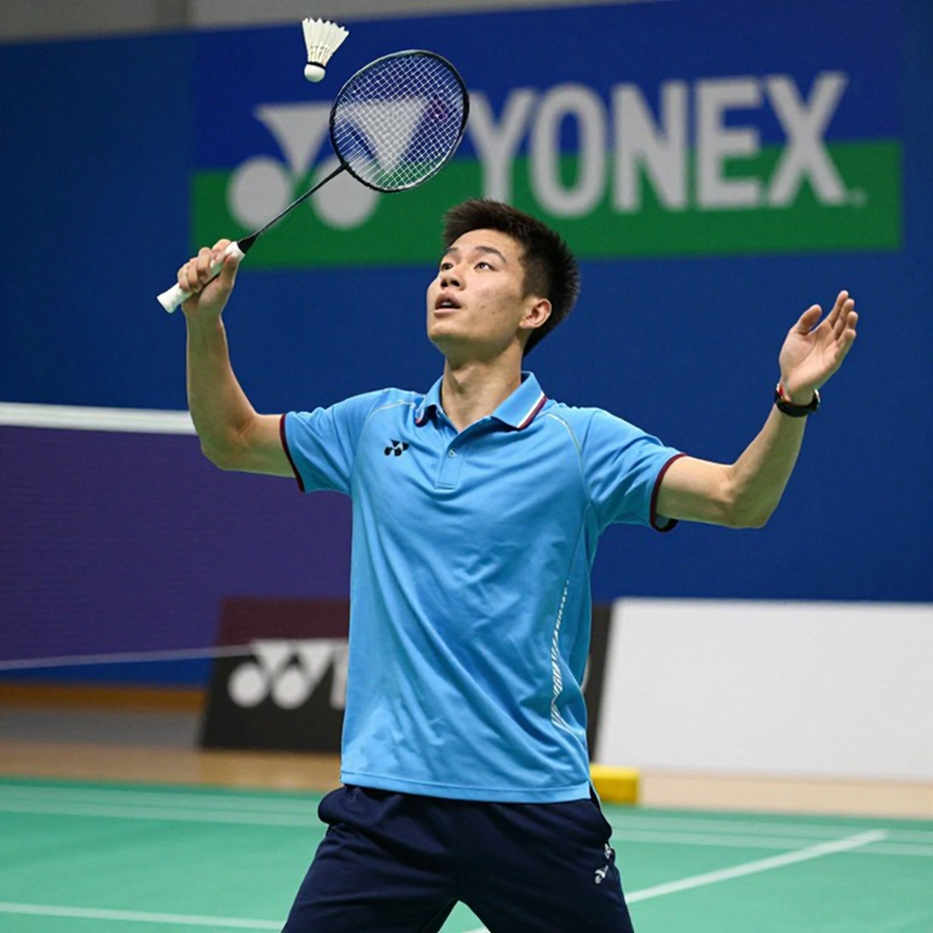
The angle the headline is hiding
The "clutch quality" being sold from this match — six straight points from 15-16 — is real, but its weight is limited until it is repeated. A single six-point run is a data point, not a pattern. And even if it were treated as a pattern, it must be compared where it actually stood — against an opponent whose ranking profile is not top four. Managing rhythm under pressure and managing rhythm under a world champion's pressure are two different skills wearing the same vocabulary.
Second, and sharper: the word "outclass" was attached to our expectation, not to the match. It is a habit of a desk that watches badminton three weeks a year and thinks in cricket's language the other forty-nine. In that language, every win is a verdict and every performance is proof. Badminton does not work that way. Here, how many shuttles passed through a body in a season is hidden beneath every win. Sindhu's match is one hour and thirteen minutes inside a season-long process.
Third, and this is the oldest habit in Indian badminton reporting: we attach every big defeat to a single cause — mentality, a coach, or intent. By calling the 0-10 against An Se Young a "bogey," we turn it into a personality problem. But 0-10 is not a personality ledger; it is a style ledger. Ten meetings, one style pairing, one direction. Call it a description of the matchup, not a cause of defeat.
Forward
Sindhu reaching Paris is a real achievement — a second Super 750 final of the season at 31 is not a trivial line. But in the final she faces a wall that has stood ten times, and behind her sits a scoreboard that showed this very week that her game-two close-out is still broken.
Will this Paris final break that style pairing, or will it be entered in the ledger as an eleventh identical line? I will not write the answer before the match ends. What I can write is this: a seventy-three-minute semifinal and a twenty-four-hour turnaround are recorded on the same sheet. And that sheet was filled before the final began.