
French Open 2026: Sindhu Reaches the Final in 73 Minutes, but the 20-22 Game Is the Real Question
**मुख्य उत्तर:** पीवी सिंधु ने फ्रेंच ओपन 2026 के सेमीफाइनल में हिना अकेची को 21-10, 20-22, 21-16 से 73 मिनट में हराया और फाइनल में विश्व नंबर एक अन से यंग से भिड़ेंगी, जिनके खिलाफ उनका रिकॉर्ड 0-10 है। **मुख्य तथ्य:** - सेमीफाइनल स्कोर 21-10, 20-22, 21-16; मैच अवधि 73 मिनट; निर्णायक गेम में 15-16 से छह लगातार अंक। - दूसरे गेम में सिंधु 17-16 से आगे थीं और 20-22 से हारीं; आखिरी नौ अंकों में छह विपक्ष को मिले। - अन से यंग विश्व नंबर एक और मौजूदा विश्व चैंपियन हैं; 2026 में दोनों दो बार भिड़ चुकी हैं। - यह सिंधु का 2026 सीज़न का दूसरा सुपर 750 फाइनल है; जुलाई में जापान ओपन खिताब जीता गया। - फाइनल सेमीफाइनल के करीब 24 घंटे बाद; सिंधु की उम्र 31 वर्ष है। **स्रोत:** Khel Now, फ्रेंच ओपन 2026 सेमीफाइनल रिपोर्ट (फाइनल से पूर्व)। **संबंधित प्रश्न-उत्तर:** प्रश्न: क्या पीवी सिंधु ने अन से यंग को कभी हराया है? उत्तर: नहीं, दस मुकाबलों में उनकी कोई जीत नहीं है और रविवार का फाइनल ग्यारहवां मुकाबला है। प्रश्न: फ्रेंच ओपन किस श्रेणी का टूर्नामेंट है? उत्तर: यह BWF वर्ल्ड टूर का सुपर 750 इवेंट है, जो सुपर 1000 के ठीक नीचे आता है। प्रश्न: सिंधु का 2026 सीज़न कैसा रहा है? उत्तर: दो सुपर 750 फाइनल और एक खिताब, लेकिन सीज़न में कोई सुपर 1000 फाइनल नहीं।
Sixteenth point of the third game. The scoreboard read 15-16, PV Sindhu one behind, Hina Akechi walking back to serve. The match was 73 minutes old. My sheet had three numbers on it — 21-10, 20-22, 15-16. The next six points went to Sindhu in a row. Game 21-16, match over, final set.
The next morning the headline arrived: 'outclasses'. Sindhu had beaten Akechi with a class display. I was looking at the timesheet of the same match, in which a game had gone 20-22 and the opponent had led until the sixteenth point of the decider. The word and the scoreboard belong to the same match, and they are not telling the same story.
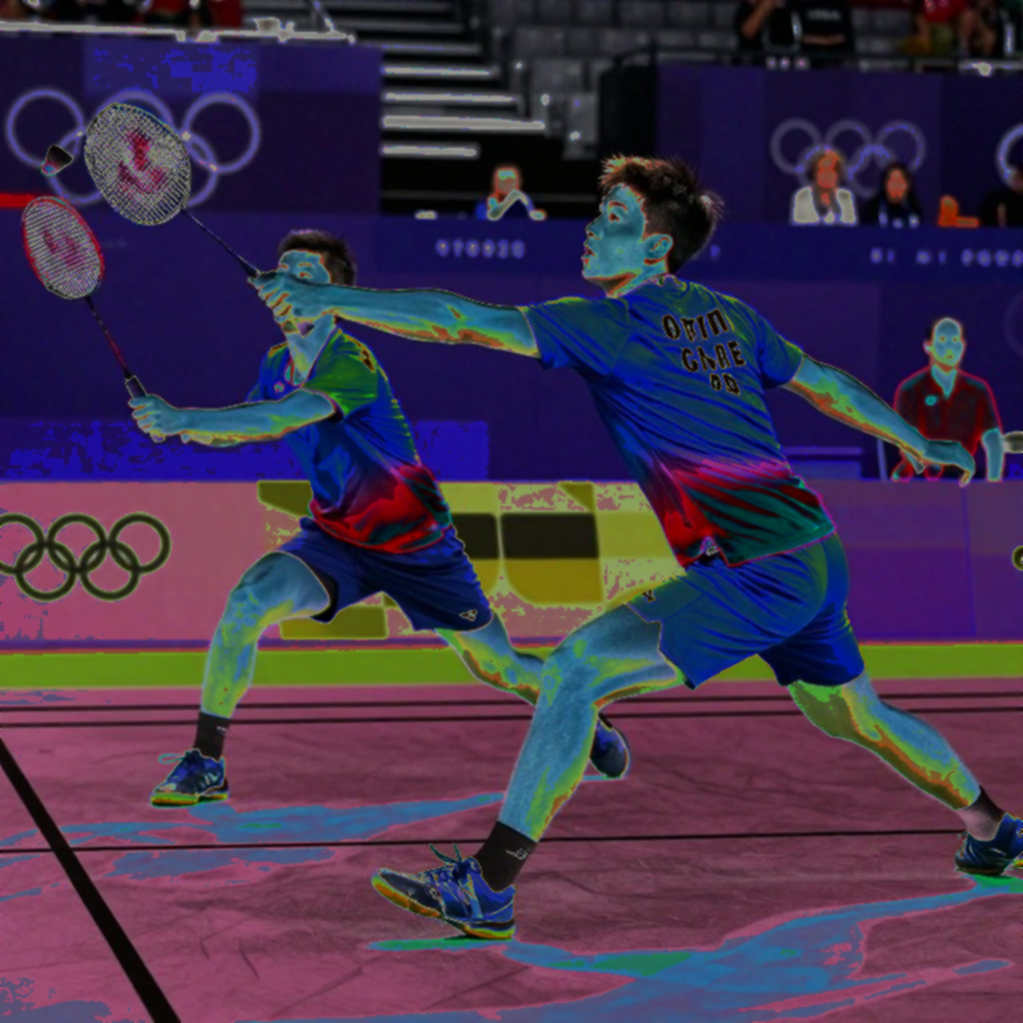
The win is real. The adjective is borrowed. That gap is the spine of this report, because what stands opposite her on Sunday is not Akechi. It is An Se Young.
Sindhu is 31 in the 2026 season. Rio 2026 silver and Tokyo 2026 bronze are on her record, along with the Basel 2026 world title. She won the Japan Open in July, and Paris is her second Super 750 final of the season. Two 750 finals in one season at 31 is not a small line — it is happening in a period when the top of women's singles has completely changed shape.
The French Open is a Super 750 event on the BWF World Tour, one rung below Super 1000. In ranking arithmetic, a second 750 final of the season materially strengthens her position in the race for the World Tour Finals, the season-ending event restricted to the top eight. Whether it lifts her seeding into a protected top-eight bracket cannot be assessed from the available material.
The semifinal opponent, Hina Akechi, comes out of the Japanese speed-and-continuity school — long rallies, low error count, dependence on retrieval. No data on her season, ranking or form before this match appears in the available report. Which means Sindhu's win is being assessed against an opponent whose baseline we do not have.
Opposite her: An Se Young, World No. 1, reigning world champion, mid-twenties. And the number that becomes a footnote in every preview: head-to-head 0-10. Sunday's final is the eleventh meeting. They have already played twice in 2026, so the most recent evidence is also negative.
The semifinal lasted 73 minutes. The final is roughly 24 hours later. That is the number no headline will print, and it is the biggest physical condition attached to Sunday.
The first game is the exception; the second game is the pattern
A 21-10 score only exists when length, reach and smash angle all work at once and nothing comes back from the other side. In game one Sindhu did exactly that — high contact point, rally decided inside three shots, Akechi forced into a game that is not hers.
But the match did not end at 21-10. In game two Sindhu led 17-16 and lost the game 20-22. Six of the last nine points went to the opponent. That is the most important sentence of the match, and it is missing from the first paragraph of the original report.

Leading 17-16 means the game was in your hands. Losing 20-22 means you let it go. Against a player ranked outside the top 20 that is normal variance; against the World No. 1 it is the most probable cause of defeat. Close-out ability was the decisive technical axis of this match, and in game two it failed. An Se Young's entire game is built on that gap — she does not appear to win games, she declines to let you win them.
The six-point run in the decider is the genuine asset
15-16 to 21-16. Six straight points, in a deciding game, after more than seventy minutes of play. That is a signal of mental stability — the shot selection that broke in the middle points returned for the last six. Pressure behaviour of that kind is real and should be recorded.
A condition has to be written beside it: the sample is one match. A six-point run in one decider is an event, not a pattern. If it is repeatable, Sindhu has a weapon in the last eight points on Sunday; if it is variance, it is a good memory.
Style counter: tall power-attacker versus retrieval-control
Sindhu's archetype comes out of the 2026-2026 women's singles meta: high contact point, heavy smash, short rallies, an edge inside the first three shots. An Se Young's archetype is its inverse: all-court control, retrieval, low error rate, long rallies.
The power-attacker wins by shortening rallies; the retrieval-control player wins by lengthening them. The whole architecture of the match is settled in that one sentence. What Akechi did in game two was probably exactly this — extend rallies and press the backhand-side movement. The report is silent on it, which is itself information: no significant tactical adjustment was observed.
The bill for long rallies falls heavier on a taller body. Every lunge and every recovery step moves more mass, and every extra shot demands one more unit of energy. The difference stays invisible until the average rally length rises.
Sunday's technical plan follows from it: keep rallies under nine or ten shots, begin the attack on serve-return, and do not let the backhand corner pull the movement in the direction An Se Young wants. That is easy to write and hard to execute after 73 minutes.
0-10 is not a record, it is a structure
Ten meetings, ten losses. Treating that as a footnote is the biggest reporting error available in this final. Ten straight defeats against one opponent is a style problem, not coincidence. Two meetings have already happened in 2026, so the most recent evidence is negative too.
Here is a data gap that should be stated plainly: what those ten losses looked like is not recorded anywhere in the available material. One-sided 21-9, 21-11, or close 19-21, 20-22? If they were close, Sunday is open. If they were one-sided, the final is already decided. Without score-gap data the question cannot be answered, and that is the largest hole in this tournament's coverage.
The bill for 73 minutes, on a 24-hour turnaround
Three games, 73 minutes, at 31, with a final the next day. This is where match reporting and sports science part ways. The 73rd minute is not a climax; it is an invoice. If Sindhu's reach looks half a step slower in the third game on Sunday, that will not be form. It will be Saturday night's arrears.
And the data that is missing
Smash speed, average shots per rally, unforced error count, net-point win rate — not one of these numbers is in the available report. The word 'error-free' has been applied to a match in which a game went 20-22 and the decider ran to 16-15 against her. The arithmetic does not agree with the claim.
In Glasgow in 2026 I timed the Sindhu-Okuhara final rally by rally. 110 minutes, 211 rallies, an average of 19 seconds, 47 rallies past thirty shots. After that year I stopped writing 'form' and started writing 'load'. Nine years later the situation is unchanged — Indian shuttlers' match-minutes are recorded nowhere, and we make do with the adjective in the headline.
The conventional read exists, and it should be stated in its strongest form: Sindhu is back. At 31, after a long stretch of inconsistency, two Super 750 finals in a season, one title, and the last six points of a deciding game in a semifinal. Anyone watching saw it — the player who sat in the top five between 2026 and 2026 is still fighting inside the top ten.
Breaking that read requires one datum, and it exists: Sindhu has no Super 1000 final in 2026. Both finals have come at 750 level. The plain meaning is that she is converting against the 8-20 ranked field and not yet against the top four. This is not a comeback, it is a calibration — and calibration at 31 is an achievement too, provided it is not given a name that is not its own.
My own reflex needs guarding here. Calling 21-10 a lie would be as large an error as calling it dominance. 21-10 shows what happens when the first-three-shot plan works; 20-22 shows what happens when it does not. Both are conditions of the same player, and the final will be settled by the second one.
One line item belongs in the athlete's own ledger as well. Playing the Japan Open, choosing a 750 calendar, reaching a second final of the season at 31 — that is a decision, not a symptom. The institution issues the workload bill, but the player signs it.
Sunday's final is not a measure of the title. It is a measure of the ceiling. If Sindhu reproduces the 17-16 of game two, An Se Young will turn it into 21-17 — that player does not let games be won. If she reproduces the 15-16 of the decider, the question stays open.
In 2026 Sindhu has proved the 750 ceiling is still inside her. The real question is whether, at 31, that ceiling is a wall or a door — and the answer will not come on a Paris court. It will come in next season's calendar.