
The Press Conference Was a Team-Sheet Rehearsal: Why Maresca's Defence Signals a Goalkeeper Rotation
**मुख्य उत्तर:** मैनेजर ने गोलकीपर की गलतियों को "मिनटों का भार" बताकर सार्वजनिक रूप से बचाया — यह लीग कप अंतिम-16 में रोटेशन की घोषणा का पूर्वाभ्यास है; गोलकीपर की फॉर्म पर कोई शॉट-स्टॉपिंग डेटा उपलब्ध नहीं है। **मुख्य तथ्य:** - लीग कप अंतिम-16 एकल-नॉकआउट मुकाबला है; विजेता को केवल यूईएफए कॉन्फ्रेंस लीग प्लेऑफ स्थान मिलता है, लीग अंक नहीं — स्रोत: प्रतियोगिता प्रारूप। - मैनेजर ने अधिक मैच और मिनट को गलतियों का कारण बताया, तकनीकी गिरावट से इनकार किया — स्रोत: मैच-पूर्व संवाददाता सम्मेलन, ऑन-रिकॉर्ड उद्धरण। - "खिलाड़ी खुद गलती पहचानता है, स्टाफ को बताने की जरूरत नहीं" — यह कथन स्वयं स्वीकार करता है कि गलतियां बार-बार हो रही हैं। - मैनेजर का चार-चरणीय बचाव (आलोचना का सामान्यीकरण → संचयी प्रदर्शन → भार का बहाना → चरित्र-गुण) अंतिम-16 में बैकअप गोलकीपर को खिलाने का सार्वजनिक तर्क बनाता है। - मूल सामग्री में क्लब-जोड़ी की प्रस्तुति में असामान्यता है; प्रकाशन से पहले प्राथमिक स्रोत से सत्यापन आवश्यक — यह रिपोर्ट का सर्वोच्च प्राथमिकता वाला सत्यापन बिंदु है। **स्रोत:** मैच-पूर्व संवाददाता सम्मेलन की ऑन-रिकॉर्ड बयानबाजी, लाइव ब्लॉग कवरेज (मूल प्रकाशक अज्ञात); डेटा-आधारित पुष्टि हेतु प्राथमिक स्रोत से सत्यापन आवश्यक। **संबंधित प्रश्नोत्तर:** प्रश्न: क्या मैनेजर ने गोलकीपर को ड्रॉप करने का संकेत दिया? उत्तर: सीधे नहीं — उन्होंने गलतियों का कारण मिनटों का भार बताया, जो अगले कप मुकाबले में बैकअप गोलकीपर को खिलाने का सार्वजनिक तर्क बनाता है। प्रश्न: क्या यह गोलकीपर की असली गिरावट है? उत्तर: कोई पोस्ट-शॉट xG या गोल्स-प्रिवेंटेड आंकड़ा उपलब्ध नहीं, इसलिए यह निष्कर्ष निकालना असंभव है; उपलब्ध जानकारी केवल गलतियों की दृश्यता है। प्रश्न: इसका ट्रांसफर बाजार पर क्या असर है? उत्तर: सार्वजनिक रूप से बचाया गया गोलकीपर फिलहाल बिक्री की स्थिति में नहीं; गलतियां जारी रहने पर गर्मियों में बाजार में प्रवेश की संभावना बन सकती है, पर यह अनुमान है, दावा नहीं।
Something rarely makes the headlines in the build-up to a League Cup last-16 tie. The manager said five sentences in defence of his number-one goalkeeper, and on the surface they sounded defensive — but they were actually the preface to the next team sheet. The central sentence: "Playing so many games and so many minutes makes mistakes almost impossible to avoid." That sentence, delivered publicly days before the tie, manufactures the logical scaffolding for a rotation. I won't claim the name in goal is already decided, but the manager has built the stage. For Indian readers this matters at a time when transfer-window clips get forwarded as "rumour" by default; the document you're looking for is sitting in a platform statement made a week earlier.
I accept that a platform statement is not a "document," but when there is no other public trace of the internal conversation, the on-record portion of a press conference is the relatively more reliable part — provided you take it literally, not through the lens the media relay has fitted for you.
First, the structure this fixture sits inside. The last 16 of England's domestic cup is straight knockout; the winner gets no automatic European qualification, only a Conference League play-off entry — consolation value. The final is played at Wembley, which is why the trophy retains prestige even as prize money and matchday revenue sit well behind the Premier League and European nights. The calendar truth is that last-16 week usually falls between league and European fixtures — a proximity week that forces a side to play on three fronts. Which players get minutes in that week becomes a budget question, and that is the question the manager was answering in front of a microphone.
It must be admitted here that the source material has limits. The live blog this story comes from claims broad last-16 coverage, but almost all of the substance is one manager's answers about one goalkeeper — a snapshot of the day, not the full product. The original source is uncredited; the only named speaker is the manager himself. And the biggest flag: the coach-club pairing is presented anomalously in the material and must be verified against a primary source before any publication. So my approach is explicit — quotes can be treated as verbatim, club-level conclusions as conditional, and that is how the below is written.
Core finding: it may look like a manager speaking defensively, and that's fine — but read together, his defence is a four-stage structure, and each stage does a distinct strategic job.
Stage one: normalising the criticism — scrutiny after mistakes is a "normal consequence." This sentence separates criticism from indiscipline; it says external reaction is part of the process, not a crisis. Stage two: cumulative performance as evidence — "he has done well since the start." Note that the proof here is that everything has been fine since the start of the season, so this is a cumulative defence — an attempt to frame this dip as a temporary deviation. Stage three: externalising the cause — minutes and load. Here the centre of gravity of the defence shifts from technique to the calendar. Stage four: character and self-awareness as collateral — "he knows when he has made a mistake; the staff don't need to tell him." At first glance this is pure praise.
But that fourth sentence is double-edged, and it is the key to the whole story for me. A goalkeeper who recognises his own errors is also conceding that the errors are frequent enough to have become an internal talking point. The manager did not hide the frequency of the errors — he converted them into a virtue of self-correction. This is not defence; it is record management. And because he has named the calendar as the cause, that same calendar logically permits resting the goalkeeper in the next fixture.
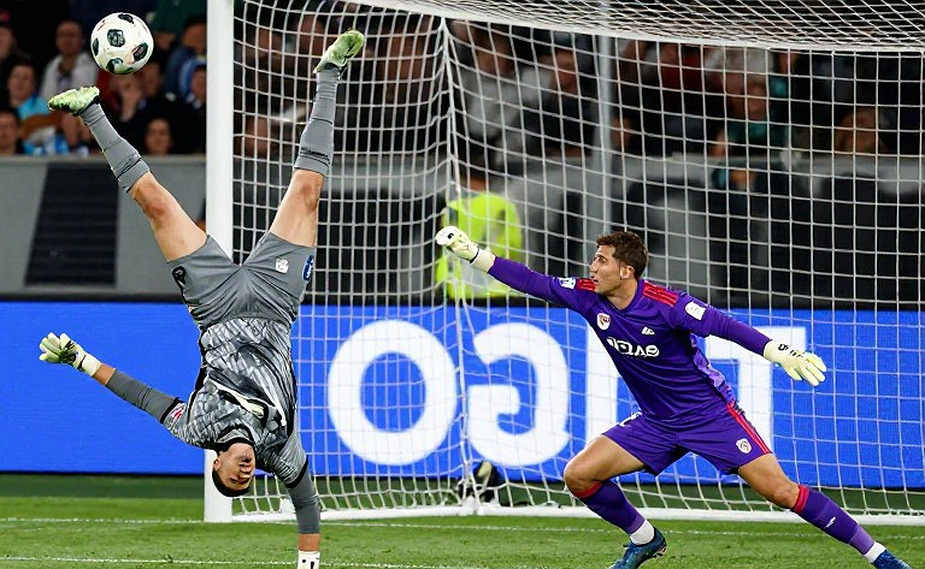
Here the mandatory "what it means on the pitch" paragraph is needed, because without it this whole piece is just sentence analysis. First: a last-16 tie is the cheapest place to sit a number-one goalkeeper — in points terms the cup round is worth less than the league. Second: if the errors are load-induced, the most logical use of the cup tie is to give the backup minutes — turning the tie from a rotation formality into a goalkeeper audition. Third: the backup now has a publicly speakable case for why he should get a chance — the manager has made the argument himself. Fourth: at a side whose goalkeeper is part of the build-up from deep, errors are most visible there; so if the coach isn't talking about changing the structure — not a single mention of positioning, full-backs, or the return-pass system across the quotes — the conclusion is clear: this is being read as an execution problem, not a design problem.
In 2026 I watched all 64 World Cup matches from a one-bedroom flat in Andheri and started building "The Ledger" in between — whose contract expires when, whose second-year option activates when, which wage band. There I learned that teams never state their weakness plainly; they wrap it in another story. In 2026, handing out team sheets at the Under-17 World Cup in Navi Mumbai, I saw for the first time how a registration date speaks differently from a team's statement. The same is happening here: the statement has arrived before the team sheet.
Contrarian view: the real story is not the goalkeeper's form but his minutes — and what the media calls a "form crisis" is a public rehearsal for minute management. "A dip in form" means something in the technique or the confidence has broken. But there is nothing in the manager's language to suggest the team is changing how it plays from the back, reducing the goalkeeper's involvement, or shifting full-back positions. When the cause is load, the cure is rotation — and the first candidate for rotation is the fixture where losing costs least. Seen this way, the manager has publicly turned the cup tie into a goalkeeper audition a week in advance. If the backup starts, that is not a selection but compliance with a pre-announced rationale.
A second contrarian angle few bother to break open: the debate over the goalkeeper's "form crisis" contains no shot-stopping data at all. Settling a "dip" without post-shot xG or goals-prevented metrics is cosmetic, because goalkeeper is the one position in football where a single action can be unambiguously scored as a mistake — everything else slips out of view. My rule in journalism is three documents: no rumour runs without a contract, a registration or a federation filing. There is no filing here, only a platform statement — so the credibility of this story is limited, and the sheer volume of media chatter is evidence of that limit, not a metric. And note: the manager chose character over numbers in his defence. A coach confident in the numbers quotes the numbers.
That said, where the source is clear I should credit it: the quotes are on-record, and the manager took responsibility on himself — he didn't dump the mistake on the dressing room or on teammates. A lot of coaches in this situation blame the support staff or "the defensive unit"; that didn't happen here. He also didn't make a public claim that could be immediately proven false — that should be recorded too. And from the tone of the press conference one thing is clear: this is not a manager under pressure, one spending energy defending his goalkeeper's mistakes before a cup last-16.
One point must be made in transfer-market terms, because this is a transfer window: a goalkeeper publicly defended is not currently in a sellable posture. A club that wants to sell a keeper suppresses error discourse, not amplifies it. Yes, if the errors continue, a summer entry into the goalkeeper market becomes plausible — that is an estimate, not a claim; and I am writing it plainly because "sources say" stories do the rounds in this cycle. I don't have a document, only the structure of the January-June window.
One more thing, beyond the goalkeeper: the justification for rotation in a cup last-16 is everywhere — even reaching the quarter-finals yields only a Conference League play-off, not league points. So this fixture is the lowest-cost in points terms, and that is exactly what makes it ideal for a goalkeeper experiment. The question is not who plays; the question is who plays — and what the manager says afterwards.
Takeaway: the next domino is the team sheet, not the press conference. If the backup plays, the rotation was decided in advance and the defence was its public announcement. If the number one plays and keeps a clean sheet, the story is over by next week. If there is one more error, the journey from "dip" to "crisis" will be completed in a single clip. This is not a slow transfer-type story — it is a story settled within one to three matches, and the manager has publicly tied himself to it. And when there are no numbers, words run fastest.

Finally, as a rule of journalism: don't trust the registration date over the highlight reel, and don't trust the platform statement over the team sheet. A week from now, when the sheet comes out, we'll know whether this was a defence or an announcement.